
The Power of Self-Compassion: How Being Kinder to Yourself Improves Your Well-Being

In a world that often prioritizes achievement, productivity, and perfection, it’s easy to forget one of the most crucial aspects of well-being: self-compassion. We’ve all experienced moments of self-doubt, criticism, or feeling like we’re not enough. But what if, instead of being our harshest critics, we became our own most compassionate supporters?
Self-compassion is the practice of treating yourself with the same kindness, understanding, and care that you would offer to a friend in need. It’s about recognizing your humanity, embracing your imperfections, and offering yourself the grace to make mistakes and learn from them. Let’s explore why self-compassion is so important and how it can transform your overall well-being.
1. Understanding Self-Compassion
Self-compassion isn’t about letting yourself off the hook or avoiding responsibility. Rather, it’s about approaching yourself with gentleness, especially when things don’t go as planned. It’s acknowledging that everyone struggles, and that your worth isn’t diminished by your challenges or failures.
There are three key components to self-compassion:
Self-Kindness: Instead of harshly judging yourself for your mistakes or shortcomings, treat yourself with warmth and care.
Common Humanity: Recognize that everyone has struggles and that you’re not alone in your experiences.
Mindfulness: Practice being present in the moment, acknowledging your thoughts and feelings without judgment.
2. The Benefits of Self-Compassion
The benefits of self-compassion extend far beyond just feeling better about yourself. Research shows that people who practice self-compassion tend to have greater emotional resilience, lower levels of anxiety and depression, and a stronger sense of overall well-being.
Some of the key benefits include:
Improved Mental Health: Self-compassion can reduce negative self-talk and increase feelings of self-worth, leading to better mental health outcomes.
Enhanced Emotional Resilience: When you treat yourself with compassion, you’re better equipped to handle life’s challenges and bounce back from setbacks.
Healthier Relationships: By being kinder to yourself, you’re likely to be more empathetic and understanding towards others, which can strengthen your relationships.
Increased Motivation: Contrary to the belief that being self-critical drives success, self-compassion can actually increase your motivation to improve and grow, as it fosters a safe environment for personal development.
3. Practical Ways to Cultivate Self-Compassion
Cultivating self-compassion takes practice, especially if you’re used to being hard on yourself. Here are some practical steps you can take to start being kinder to yourself:
1. Speak to Yourself Like a Friend: The next time you catch yourself engaging in negative self-talk, pause and ask yourself, “Would I say this to a friend?” If the answer is no, reframe your thoughts in a more compassionate way.
2. Practice Mindful Self-Awareness: Take time to notice your thoughts and feelings without judgment. Mindfulness allows you to acknowledge your struggles without getting overwhelmed by them, creating space for self-compassion to flourish.
3. Embrace Your Imperfections: Accept that being human means being imperfect. Instead of striving for unrealistic standards, celebrate your uniqueness and the lessons you learn from your mistakes.
4. Take Care of Your Needs: Self-compassion involves prioritizing your well-being. Make time for activities that nourish your mind, body, and soul, whether it’s through rest, exercise, creative expression, or connecting with loved ones.
5. Remind Yourself of Common Humanity: When you’re feeling down, remember that you’re not alone. Everyone faces difficulties, and your struggles don’t make you any less worthy of love and kindness.
4. Integrating Self-Compassion into Your Daily Life
Self-compassion is a skill that can be integrated into your daily life. Start by setting aside time each day to practice mindfulness or self-reflection. When challenges arise, consciously choose to treat yourself with kindness and understanding rather than criticism. Over time, these small shifts can lead to profound changes in how you relate to yourself and others.
Remember: Self-compassion is not a one-time event but a continuous practice. It’s about making a commitment to be gentle with yourself, especially in moments of difficulty. As you nurture this practice, you’ll likely find that you approach life with greater ease, resilience, and joy.
Support Your Self-Compassion Journey with Our Course Library
If you’re ready to deepen your practice of self-compassion and enhance your overall well-being, our Course Library is here to support you. With courses on topics such as body image, intuitive eating, emotional eating, managing stress, eating disorder awareness, and joyful movement, you’ll find the tools and guidance you need to thrive.
Explore Our Courses:
Body Image: Develop a positive and empowering relationship with your body.
Intuitive Eating: Learn to nourish yourself without guilt by listening to your body’s hunger cues.
Emotional Eating: Address emotional triggers and build a healthier relationship with food.
Managing Stress: Cultivate strategies to manage stress and maintain balance in your life.
Eating Disorder Awareness: Gain insight and support for eating disorder recovery.
Joyful Movement: Discover ways to enjoy physical activity that feels good and supports your well-being.
Explore our Course Library today and take the next step on your journey toward self-compassion and holistic wellness.
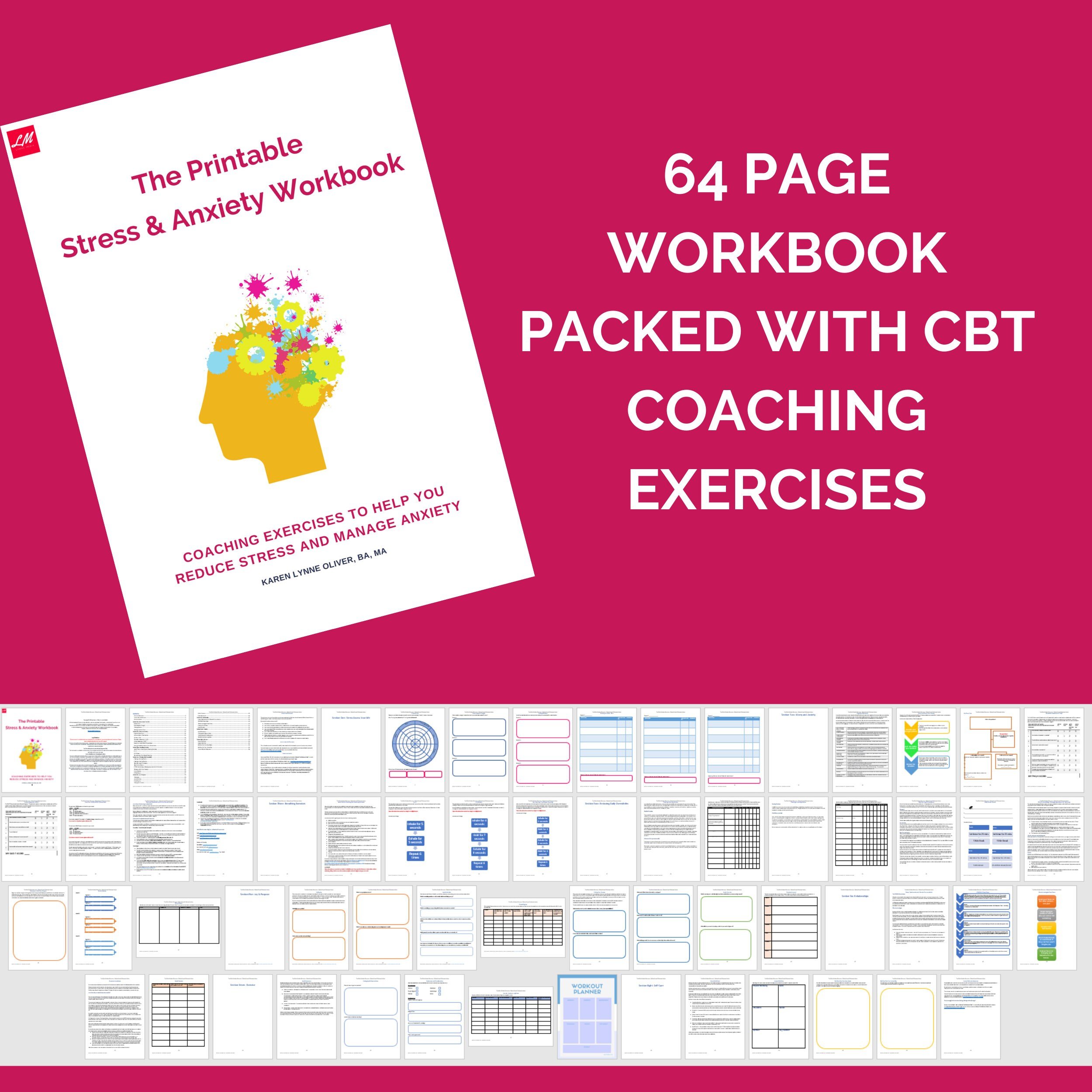
“I lay in bed a night feeling crushed under the weight of life’s responsibilities. Stress is wrecking my sleep and then I wake up so tired the next day and have to rush around trying to do it all! My health isn’t what it once was, and my relationship is falling apart; we just snap at each other all the time and argue about housework.”
Does this sound like you?
This workbook is for you if you feel like you're overwhelmed with life's worries and responsibilities. Stress and anxiety is likely to be affecting your health, happiness, and your work and personal life. This workbook will help you reduce sources of everyday stress and put in place coping strategies for anxiety.
By the end of this workbook you will:
• Recognise the symptoms of anxiety and depression
• Learn how to manage thoughts of worry, catastrophic thinking and negative thought patterns.
• Learn how breathing exercises can relieve the symptoms of stress and immediately calm you down.
• Learn how using SCRUM methodology can make managing your work and business significantly less stressful and more productive.
• Put in place highly effective morning and evening routines, tailed to your lifestyle.
• Bring joy, passion and creativity back into your life and find your sense of purpose.
• Reduce feelings of isolation, put less pressure on your romantic connections and rekindle your social life in a way that fits around your life's responsibilities and interests.
• Put in place lifestyle habits which will support your calm mindset and improve your overall health.
This workbook is packed with useful ‘cheat sheets’ and worksheets for you to print and make copies of.
TIPS:
This workbook contains a mix of portrait and landscape pages. Please select 'Auto portrait/landscape'
when printing.
You can also print on both sides to save paper.
**No Printer? No problem!**
Your purchase includes a digitally fillable pdf, which you can complete using your computer :)
ABOUT THE CREATOR:
Karen Lynne Oliver, BA, MA, is the owner of Lynne Media and the founder of Beyond The Bathroom Scale®, a hub of self-help resources to aid with recovery from disordered eating and body image.
A former Social Worker, Karen holds a bachelor’s degree in Sociology, specializing in health and society and a master’s degree in Social Work. She has trained in counselling skills and psychotherapy-based approaches including Cognitive Behavioural Therapy (CBT), Dialectical Behavioural Therapy (DBT) and Motivational Interviewing (MI).
Karen has previously written HuffPost UK and has been featured in The Metro, Cambridge Independent and Cosmopolitan Magazine.
______________________________________________________________________________________________________________________________________________________________________
NOT LICENSED FOR PROFESSIONAL USE
To obtain a professional use license, please purchase the workbooks using this link: https://beyondthebathroomscale.co.uk/therapy-workbooks/p/body-image-disordered-eating-cbt-workbooks-digitally-fillable-and-printable-for-professional-use-health-coach-therapist-pt
© Copyright 2020 Beyond The Bathroom Scale® – All Rights Reserved.
"Beyond The Bathroom Scale" is a Registered UK Trademark and the intellectual property of the website owner, Karen Oliver, trading as Beyond The Bathroom Scale, part of Lynne Media ('our', 'we', 'us').
We take the protection of our intellectual property very seriously. If we discover that you have breached the terms of the license, we may bring legal proceedings against you and seek monetary damages and/or an injunction to stop you using our materials. You could also be ordered to pay our legal costs.

This ultimate bundle is made up of 5 amazing digital workbooks for you to complete digitally using your computer, or print off, pop in a binder and work through at your own pace.
It's like having your own health coach at your fingertips, only it costs less than the average price of one coaching session!
The workbooks included:
WORKBOOK ONE: STRESS & ANXIETY
This workbook is for you if you feel like you're overwhelmed with life's worries and responsibilities. Stress is likely to be affecting your health, happiness, and your work and personal life.
By the end of this workbook you will:
• Recognise the symptoms of anxiety and depression
• Learn how to manage thoughts of worry, catastrophic thinking and negative thought patterns.
• Learn how breathing exercises can relieve the symptoms of stress and immediately calm you down.
• Learn how using SCRUM methodology can make managing your work and business significantly less stressful and more productive.
• Put in place highly effective morning and evening routines, tailed to your lifestyle.
• Bring joy, passion and creativity back into your life and find your sense of purpose.
• Reduce feelings of isolation, put less pressure on your romantic connections and rekindle your social life in a way that fits around your life's responsibilities and interests.
• Put in place lifestyle habits which will support your calm mindset and improve your overall health.
WORKBOOK TWO: BODY IMAGE //Expanded Edition//
This printable workbook is designed to help you move from a place of hating your body, to a place of respecting and accepting your body, while also recognizing that you are so much more than your appearance. After completing the coaching exercises your body image will no longer hold you back from the parts of life you've been missing out on.
This 37-page workbook is split into three parts:
1. Body Neutrality - Shifting your focus away from your physical appearance and onto the other parts of what makes you, you.
2. Body Acceptance – Learning how to show your body respect and compassion and reach a place of peaceful acceptance with it.
3. Body Confidence – Reaching the stage where we don’t let our appearance or, more accurately, the thoughts we have about our appearance hold us back from enjoying the life we want.
WORKBOOK THREE: EMOTIONAL EATING
This workbook is packed with coaching exercises based on Cognitive Behavioural Therapy (CBT) to help you better understand the causes of emotional eating and put in place effective alternative, more effective coping strategies for difficult emotions.
This workbook is split into three parts:
1. Understanding Emotional Eating
2. Developing Emotional Awareness
3. Developing Coping Strategies for Difficult Emotions
My approach to Emotional Eating is ‘Anti-Diet’, which means I do not view emotional eating as an ‘eating problem’. Research shows that responding to emotional eating by restricting food intake increases the risk of binge eating and so this is something I strongly advise against when working to overcome emotional eating.
Instead, the focus throughout this workbook will be to become more emotionally aware that we can accurately label our emotions, identify our underlying needs and meet them effectively.
By taking the time to work through the 43 pages of this workbook, you will:
• Understand why dieting or food restriction is NOT a solution to emotional eating (and why it exacerbates it)
• Understand why you comfort eat and how it's benefiting you (yes, really)
• Increase your emotional awareness - you'll be able to accurately label what you're feeling and identify the cause of it
• Develop effective, alternative coping strategies for coping with strong emotions
WORKBOOK FOUR: PEACEFUL EATING
The Printable Intuitive Eating Workbook for people who want to leave diets behind once and for all and embrace Intuitive Eating instead.
The workbook is split into three parts:
1. Developing Body Awareness – these exercises are designed to help you check in with your body’s signals, including your hunger and fullness cues.
2. Unconditional Permission to Eat – these exercises will help you understand and ditch the food rules you’ve adopted from past diets and diet culture.
3.Mindful Eating – these final exercises will help you find enjoyment and satisfaction from food and listen out for pesky thoughts of diets creeping back into your mind.
WORKBOOK FIVE: HEALTH BEYOND THE SCALE
In this workbook, we will be taking steps to improve our physical health, without focusing on weight. The truth is, we can only truly focus on our health, both physical and psychological once we have totally removed ourselves from diet culture and the dieting mindset.
Throughout this workbook, I want you to keep in mind that our health is important, but that it is also not a measure of our self-worth. It does not define us as people, as we are not ‘bad’ people when we become ill or if we have health issues.
This workbook is split into three parts:
• Part 1 - Joyful movement, where we will look at how to add pleasurable forms of movement into our lives and working through the barriers and issues we may have around exercise.
• Part 2 - Gentle nutrition, where we will look at the physical effect’s food has on us, some general nutritional guidelines (not rules!), and why calories and portion sizes are irrelevant. We will also discuss what we mean by the term ‘play-food’ and the value of ‘play-food’.
• Part 3 - Alternative ways to assess health, where we will look at biomarkers such as blood pressure, blood glucose, and blood cholesterol. All of these are far more useful in diagnosing, managing, and preventing common lifestyle illness, than simply stepping on a bathroom scale.
______________________________________________________________________________________________________________________________________________________________________
PRINTING TIPS:
This workbook contains a mix of portrait and landscape pages. Please select 'Auto portrait/landscape'
when printing.
You can also print on both sides to save paper.
Follow me on Instagram & Facebook: @beyondthebathroomscale
______________________________________________________________________________________________________________________________________________________________________
ABOUT THE CREATOR
Karen Lynne Oliver, BA, MA, is the founder of Beyond The Bathroom Scale®, a hub of self-help resources to aid with recovery from disordered eating and body image.
A former Social Worker, Karen holds a bachelor’s degree in Sociology, specialising in health and society and a master’s degree in Social Work. She has trained in counselling skills and psychotherapy-based approaches including Cognitive Behavioural Therapy (CBT), Dialectical Behavioural Therapy (DBT) and Motivational Interviewing (MI).
Karen has previously written HuffPost UK and has been featured in The Metro, Cambridge Independent and Cosmopolitan Magazine.
______________________________________________________________________________________________________________________________________________________________________
NOT LICENSED FOR PROFESSIONAL USE
To obtain professional use license, please purchase the workbooks using this link: https://beyondthebathroomscale.co.uk/therapy-workbooks/p/body-image-disordered-eating-cbt-workbooks-digitally-fillable-and-printable-for-professional-use-health-coach-therapist-pt
© Copyright 2020 Beyond The Bathroom Scale® – All Rights Reserved.
"Beyond The Bathroom Scale" is a Registered UK Trademark and the intellectual property of the website owner, Karen Oliver, trading as Beyond The Bathroom Scale, part of Lynne Media ('our', 'we', 'us').
We take the protection of our intellectual property very seriously. If we discover that you have breached the terms of the license, we may bring legal proceedings against you and seek monetary damages and/or an injunction to stop you using our materials. You could also be ordered to pay our legal costs.
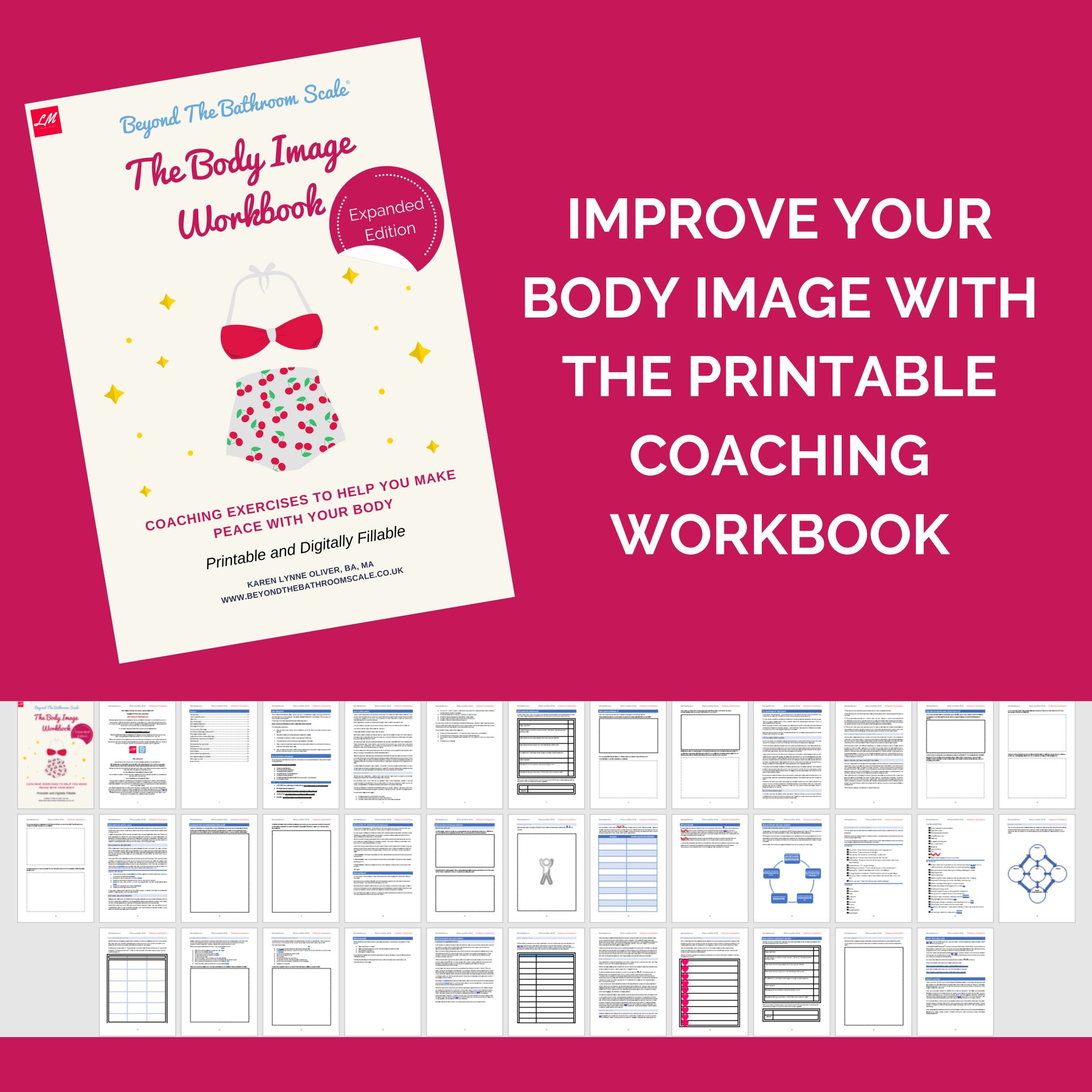
“I hate my body, I hate being seen in swimwear on holiday and I avoid exercising in public. I don’t feel comfortable in anything I wear. I have clothes in my wardrobe which I’m hoping to slim into… they’ve been there for 15 years. I usually wear something baggy to cover up my body.”
Does this sound like you?
This coaching workbook is designed to help you move from a place of hating your body, to a place of respecting and accepting your body, while also recognising that you are so much more than your appearance.
After completing the coaching exercises your body image will no longer hold you back from the parts of life you've been missing out on.
This workbook is split into three parts of coaching exercises:
1. Body Neutrality - Shifting your focus away from your physical appearance and onto the other parts of what makes you, you.
2. Body Acceptance – Learning how to show your body respect and compassion and reach a place of peaceful acceptance with it.
3. Body Confidence – Reaching the stage where we don’t let our appearance or, more accurately, the thoughts we have about our appearance, hold us back from enjoying the life we want.
//UPDATED - June 2021 // My bestselling workbook has now been expanded to include more coaching exercises and information to help you heal your body image!
_____________________________________________________________________
**No Printer? No problem!**
Your purchase is a digitally fillable pdf, which you can complete using your computer :)
_____________________________________________________________________
About the Author & Store Owner:
Karen Lynne Oliver, BA, MA, is the Founder of Beyond The Bathroom Scale®, a hub of self-help resources to aid with recovery from disordered eating and body image. Karen is also the Programme Director of The Health Mindset Programme™, a 6-month online self-help programme for anyone who wants to improve their body image and relationship with food.
Karen has had articles published in on HuffPost UK and has been featured in The Metro and Cosmopolitan Magazine. Her award-winning blog and coaching programme is based on the Health at Every Size ® approach to health and draws on the principals of Intuitive Eating, the Body Positivity movement, Motivational Interviewing (MI), Positive Psychology and Dialectical Behaviour Therapy (DBT), in order to help busy women tackle disordered eating, overcome emotional eating and recover from long-term dieting via a holistic, research-led online coaching programme.
A former Social Worker, Karen comes from an academic background of Psychology and Sociology. She holds a bachelor’s degree in Sociology, specialising in health and society and a master’s degree in Social Work. She has trained in Counselling skills and Psychotherapy-based approaches such as CBT, DBT and Motivational Interviewing.
______________________________________________________________________________________________________________________________________________________________________
NOT LICENSED FOR PROFESSIONAL USE
To obtain a professional use license, please purchase the workbooks using this link: https://www.etsy.com/uk/listing/850608675/body-image-disordered-eating-cbt
© Copyright 2020 Beyond The Bathroom Scale® – All Rights Reserved.
"Beyond The Bathroom Scale" is a Registered UK Trademark and the intellectual property of the website owner, Karen Oliver, trading as Beyond The Bathroom Scale, part of Lynne Media ('our', 'we', 'us').
We take the protection of our intellectual property very seriously. If we discover that you have breached the terms of the license, we may bring legal proceedings against you and seek monetary damages and/or an injunction to stop you using our materials. You could also be ordered to pay our legal costs.