
Want to Improve Your Health? Focus on Reducing Stress, Not Weight
Stress, and stress-related illnesses and symptoms are on the rise, and there’s no doubt that COVID-19 has compounded what was already a huge problem for society. But rather than taking steps to reduce stress and manage anxiety, society is distracted by dieting and the pursuit weight loss, which more often than not, backfires and worsens a person’s health over the long term, rather than improves it.
In this article, I will explain why stress is so damaging for your health and illustrate how many of the health problems we associate with weight, can be alleviated or managed by tackling mental health rather than fixating on dieting or weight loss.
To start with, here are some recent statistics on stress (Mental Health Foundation, 2018):
74% of UK adults have felt so stressed at some point over the last year they felt overwhelmed or unable to cope.
81% of women said this compared to 67 percent of men.
83% of 18-24-year-olds said this compared to 65 percent of people aged 55 and over.
So, we can see that while stress can and does affect anyone, it disproportionately affects more women and young people.
Stress and mental health
In the same study, it was found that stress can have very serious consequences for our mental health:
32% of adults said that they had experienced suicidal feelings because of stress
35% of women said this compared to 29 percent of men.
39% of 18-24-year-olds said this compared to 25 percent of adults aged 55 and over.
16% of adults said they had self-harmed because of stress.
18% of women said this compared to 13 percent of men.
29% of 18-24-year-olds said this compared to 6 percent of adults aged 55 and over.
Anxiety and stress
Anxiety as an emotion, is a normal response to stress or danger and is often called the ‘flight or fight’ response. This process involves adrenaline being quickly pumped through the body enabling it to cope with whatever catastrophe lies ahead. This is an evolutionary response, which as you can imagine, would have been lifesaving back in our ancestor's cave dwelling days, which would have entailed having to run from wild animals and rival tribes.
In today's world however, the source of stress (a ‘stressor’) is rarely a life-threatening situation and is more likely to be an ongoing problem. Anxiety disorders arise when our response to a stressor is out of proportion to the actual danger of the situation, or indeed is generated when there is no danger present.
Mental health issues, including Anxiety disorders are very common. As reported by the UK mental health charity, Mind:
Approximately 1 in 4 people in the UK will experience a mental health problem each year (McManus, 2009).
In England, 1 in 6 people report experiencing a common mental health problem, such as anxiety and depression in any given week (McManus S, 2016).
Stress and the biological ‘fight or flight’ response
Before we dig into how stress impacts our health and lives and the causes of stress, it's useful to understand how our bodies experience stress on a biological level. If you really don't like biology, feel free to skip onto the next section, but personally, I've found understanding my body's reaction helps me notice when I'm showing the first physiological signs of stress and manage it more effectively.
The ‘flight or fight’ response is the term given to the biological process our brain initiates when we come up against a threat or perceived threat. It's a survival instinct, which is quite simply in place to get us to either physically fight a threat, such as an attacker, or ‘take flight’, i.e. run away from a threat, like a mudslide or tornado.

The stages of the ‘flight or fight’ response
The ‘fight or flight’ response begins the moment we come face to face with a trigger. This might be a bear, an oncoming lorry, exam, ringing phone or even your partner’s clothes dumped on the bedroom floor.
The response then begins in the brain, specifically in a part called the ‘amygdala’. This then triggers a neural response in another part called the ‘hypothalamus’, which then activates the pituitary gland. The pituitary gland then secretes adrenocorticotropic hormone (ACTH).
At the same time, the adrenal gland is activated, and this releases adrenaline (epinephrine) into the blood stream and the neurotransmitter, noradrenaline (norepinephrine) into the brain.
This triggers the release of cortisol, which increases our blood pressure, blood sugar levels and suppresses our immune and digestive systems. This part is key, and we'll come back to this in a moment when we discuss the impact that stress has on our health.
Our liver cells produce additional glucose and cortisol turns fatty acids into to energy, this is to give us a boost of energy to either fight or run away from the threat (Mariotti, 2015).
The Stages of the ‘Fight or Flight’ stress response.
Physical effects of the stress response
When this response is triggered, our body experiences a series of physical changes to adapt to the situation (more specifically, to prepare our body to either fight or take flight). These include:
Our pupils dilate
Our heart rate increases
Our face becomes flushed
We might experience shaking
We can experience tunnel vision and hearing loss
Our bladder relaxes (we might wet ourselves)
Our digestive system slows
Our mouth might become dry
Try to look out for these signs next time something triggers you, such as an argument at work. You may experience many of these signs as part of the fight or flight response.
The physiological changes that occur during the fight or flight response are activated to give the body increased strength and speed in anticipation of fighting or running.
Some of the specific physiological changes and their functions include:
Increased blood flow to the muscles activated by diverting blood flow from other parts of the body.
Increased blood pressure, heart rate, blood sugars, and fats to supply the body with extra energy.
The blood clotting function of the body speeds up to prevent excessive blood loss in the event of an injury sustained during the response.
Increased muscle tension to provide the body with extra speed and strength.
As you can image, this response is incredibly effective and life saving for reacting to immediate threats and danger to our life, but, as I'm sure you can already imagine by now, exposure to prolonged stress can cause a lot of issues for our bodies as they remain in this response for the long term (Mental Health Foundation, 2019).
Immediate stress vs prolonged stress
Our body's biological response to threats (triggers/stressors) is incredibly effective and life saving for reacting to immediate threats and danger to our life. It's designed to be a short-term response which then has a resolution.
For example, imagine that you're driving along a narrow dark country road and see a lorry heading straight towards you, you panic that you're about to have a head-on collision, so your fight or flight response kicks in, allowing you to respond immediately by swerving out the way or slamming your breaks on.
Once the lorry has passed, or you have stopped at the side of the road, completely unharmed and once again safe, the level of cortisol and adrenaline secreted during the fight or flight response begins to decrease and your body slowly returns to its normal state. Your digestive systems pick up again, your muscle relax, your heart rate returns to normal, your blood pressure lowers, and your blood sugar levels return to normal (Mayo Clinic, 2019).
So, what happens when the stressor, or trigger isn't something that can be quickly resolved?
Exposure to prolonged stress can cause a lot of issues for our bodies as they remain in the 'fight or flight' state for the long term, with many of our systems suppressed (including our immune system, digestive system, sexual responses) and our heart rate, blood pressure and blood sugar remaining raised.
“I lay in bed a night feeling crushed under the weight of life’s responsibilities. Stress is wrecking my sleep and then I wake up so tired the next day and have to rush around trying to do it all! My health isn’t what it once was, and my relationship is falling apart; we just snap at each other all the time and argue about housework.”
Does this sound like you?
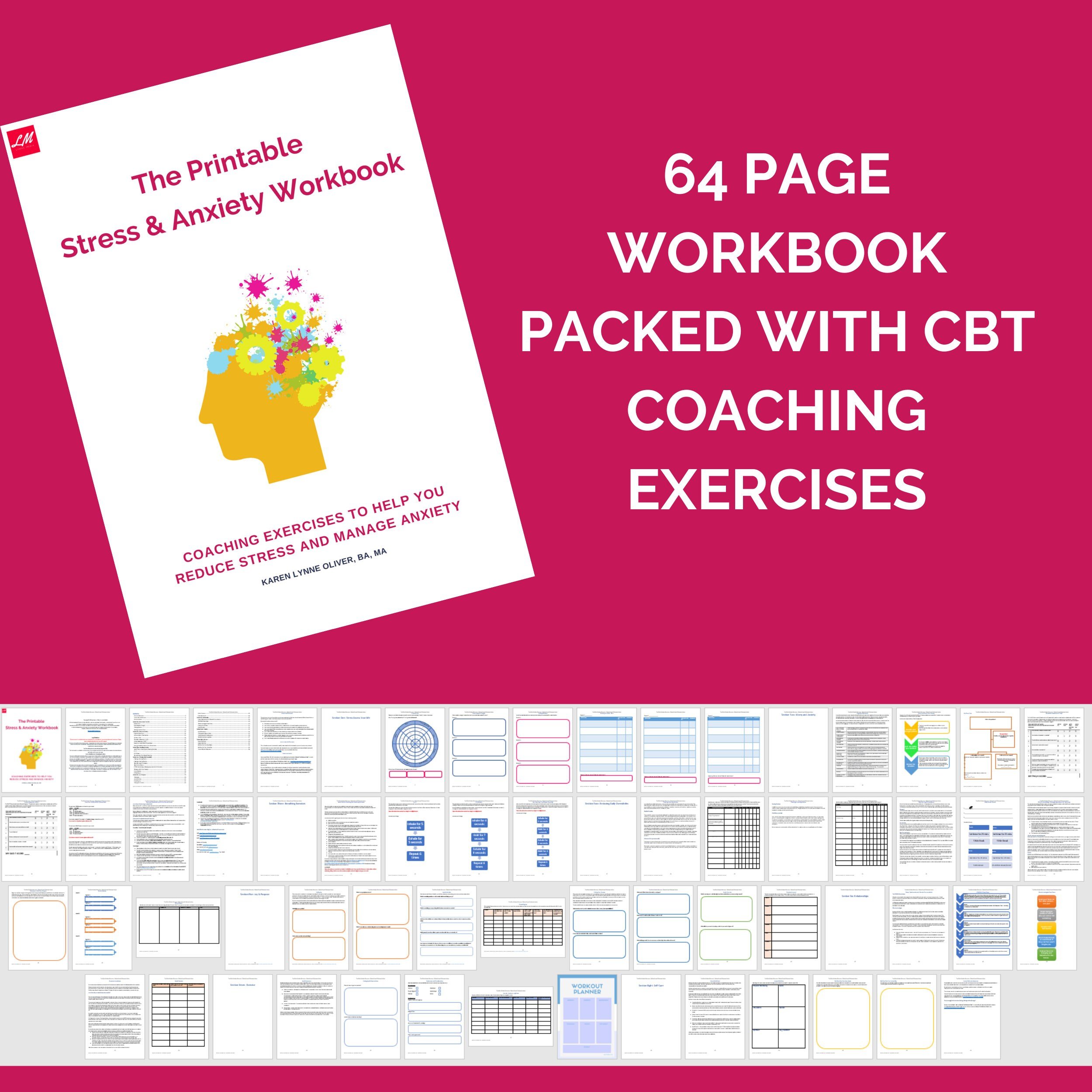
This workbook is for you if you feel like you're overwhelmed with life's worries and responsibilities. Stress and anxiety is likely to be affecting your health, happiness, and your work and personal life. This workbook will help you reduce sources of everyday stress and put in place coping strategies for anxiety.
By the end of this workbook you will:
• Recognise the symptoms of anxiety and depression
• Learn how to manage thoughts of worry, catastrophic thinking and negative thought patterns.
• Learn how breathing exercises can relieve the symptoms of stress and immediately calm you down.
• Learn how using SCRUM methodology can make managing your work and business significantly less stressful and more productive.
• Put in place highly effective morning and evening routines, tailed to your lifestyle.
• Bring joy, passion and creativity back into your life and find your sense of purpose.
• Reduce feelings of isolation, put less pressure on your romantic connections and rekindle your social life in a way that fits around your life's responsibilities and interests.
• Put in place lifestyle habits which will support your calm mindset and improve your overall health.
This workbook is packed with useful ‘cheat sheets’ and worksheets for you to print and make copies of.
TIPS:
This workbook contains a mix of portrait and landscape pages. Please select 'Auto portrait/landscape'
when printing.
You can also print on both sides to save paper.
**No Printer? No problem!**
Your purchase includes a digitally fillable pdf, which you can complete using your computer :)
ABOUT THE CREATOR:
Karen Lynne Oliver, BA, MA, is the owner of Lynne Media and the founder of Beyond The Bathroom Scale®, a hub of self-help resources to aid with recovery from disordered eating and body image.
A former Social Worker, Karen holds a bachelor’s degree in Sociology, specializing in health and society and a master’s degree in Social Work. She has trained in counselling skills and psychotherapy-based approaches including Cognitive Behavioural Therapy (CBT), Dialectical Behavioural Therapy (DBT) and Motivational Interviewing (MI).
Karen has previously written HuffPost UK and has been featured in The Metro, Cambridge Independent and Cosmopolitan Magazine.
______________________________________________________________________________________________________________________________________________________________________
NOT LICENSED FOR PROFESSIONAL USE
To obtain a professional use license, please purchase the workbooks using this link: https://beyondthebathroomscale.co.uk/therapy-workbooks/p/body-image-disordered-eating-cbt-workbooks-digitally-fillable-and-printable-for-professional-use-health-coach-therapist-pt
© Copyright 2020 Beyond The Bathroom Scale® – All Rights Reserved.
"Beyond The Bathroom Scale" is a Registered UK Trademark and the intellectual property of the website owner, Karen Oliver, trading as Beyond The Bathroom Scale, part of Lynne Media ('our', 'we', 'us').
We take the protection of our intellectual property very seriously. If we discover that you have breached the terms of the license, we may bring legal proceedings against you and seek monetary damages and/or an injunction to stop you using our materials. You could also be ordered to pay our legal costs.
The health impact of ongoing stress
As you will see from this list, stress impacts pretty much every area of our body:
Mental health problems, such as depression, anxiety, and personality disorders
Cardiovascular disease, including heart disease, high blood pressure, abnormal heart rhythms, heart attacks, and stroke
Total loss of or increase of appetite
Storage of fat tissue, usually around our middle
Headaches
Menstrual problems
Sexual dysfunction, such as impotence and premature ejaculation in men and loss of sexual desire in both men and women
Skin and hair problems, such as acne, psoriasis, and eczema, and permanent hair loss
Gastrointestinal problems, such as GERD, gastritis, ulcerative colitis, and irritable colon, Irritable Bowel Syndrome, nausea, and indigestion
Sleep problems
Memory problems and difficulty concentrating
Fatigue
Loss of desire to exercise
Increase of coughs, colds, and flu-like symptoms
Looking at the impact prolonged stress has on our health, it's clear that taking the time to learn how to effectively reduce our stress levels and manage anxiety, is hugely beneficial for our health (Web MD, 2019). This is why, alongside helping students and clients improve their relationship with food and body image, I also teach stress and anxiety management techniques, many of which you can find in my new book: The Calm Mindset Workbook, out now and available from Amazon.

Are you ready to heal from the pain of a toxic relationship and rediscover your inner strength? This CBT-based workbook is designed to guide you through the emotional aftermath of heartbreak, helping you process, reflect, and move forward with clarity and confidence.
What’s Inside:
30 powerful exercises and reflective questions to help you challenge negative thoughts, rebuild self-esteem, and set healthy boundaries for the future.
Step-by-step guidance using Cognitive Behavioural Therapy (CBT) techniques proven to foster emotional healing and growth.
Thoughtful prompts designed to help you reframe your experiences, release lingering pain, and focus on creating healthier relationships.
Why You'll Love This Workbook:
Downloadable & Printable PDF: Instantly access this workbook and choose how you complete it! Whether you prefer printing it out or filling it in digitally, this flexible format works for you.
Personalized Healing Journey: Take control of your recovery with exercises you can complete at your own pace. There’s no rush—heal in a way that feels right for you.
Self-Reflection Made Easy: Our structured prompts guide you through the complex emotions of heartbreak, helping you gain insight, process your pain, and rebuild your sense of self-worth.
Features:
Instant Download: Get your workbook immediately upon purchase and start your healing journey today.
Print or Complete Digitally: The PDF format allows you to either print out your workbook or fill it in digitally on your favorite device.
30+ Pages of Healing Exercises: Comprehensive exercises rooted in CBT practices, designed specifically for those recovering from toxic relationships.
This workbook is perfect for anyone seeking to rebuild after a toxic relationship, gain emotional clarity, and move forward with purpose and confidence. You deserve to heal, and this workbook is your companion on that journey.
Start healing today. Download your workbook and take the first step toward reclaiming your strength and happiness.