
Navigating Food-Related Anxiety During the Festive Season: Tips for a Stress-Free Christmas and New Year’s
The festive period is a time of warmth, celebration, and connection, filled with cosy meals and special treats that bring people together. But for many, it’s also a time of heightened anxiety, particularly when it comes to food. The pressure to indulge, the fear of judgment, and the stress of navigating social gatherings can make this time of year feel overwhelming rather than joyful.
If you find yourself struggling with food-related anxiety during Christmas and New Year’s, know that you’re not alone—and that it’s entirely possible to enjoy the festive period without the weight of worry. Here’s how you can navigate food-related anxiety with compassion, mindfulness, and self-care.
1. Recognize and Acknowledge Your Feelings
The first step in managing food-related anxiety is to recognize and acknowledge how you’re feeling. It’s normal to experience a range of emotions during the festive period, and it’s okay to feel anxious about food and social situations. By acknowledging these feelings without judgment, you can begin to address them with kindness.
Try This:
Journal Your Thoughts: Write down how you’re feeling about upcoming festive gatherings. What specific anxieties are coming up for you? Seeing them on paper can help you gain clarity and perspective.
Name Your Emotions: Sometimes, simply naming the emotion you’re experiencing—whether it’s anxiety, fear, or something else—can help reduce its intensity.
2. Set Boundaries That Support Your Well-Being
During the festive period, it’s important to set boundaries that protect your mental and emotional health. This might mean declining certain invitations, bringing your own food to gatherings, or simply stepping away from conversations that feel triggering. Boundaries are a form of self-care, and they allow you to participate in the festivities in a way that feels safe and comfortable for you.
How to Set Boundaries:
Know Your Limits: Take some time to reflect on what feels manageable for you during the festive period. Be honest with yourself about your needs.
Communicate Clearly: If you need to set boundaries with others, communicate them calmly and clearly. For example, “I’m going to bring a dish that I’m comfortable with,” or “I’ll be stepping outside for a few minutes if I need a break.”
Respect Your Boundaries: Remember that it’s okay to prioritize your well-being, even if it means saying no to certain events or situations.
“Food is always on my mind. I feel out-of-control around my favourite foods, I always end up binging on them when I finally let myself have them. I worry about calories and macros and track them using an app. I have a long history of dieting which started when I was a teenager. I feel like food probably isn’t this big of a deal for other people, I wish I could relax around it like they seem to.”
Does this sound like you?
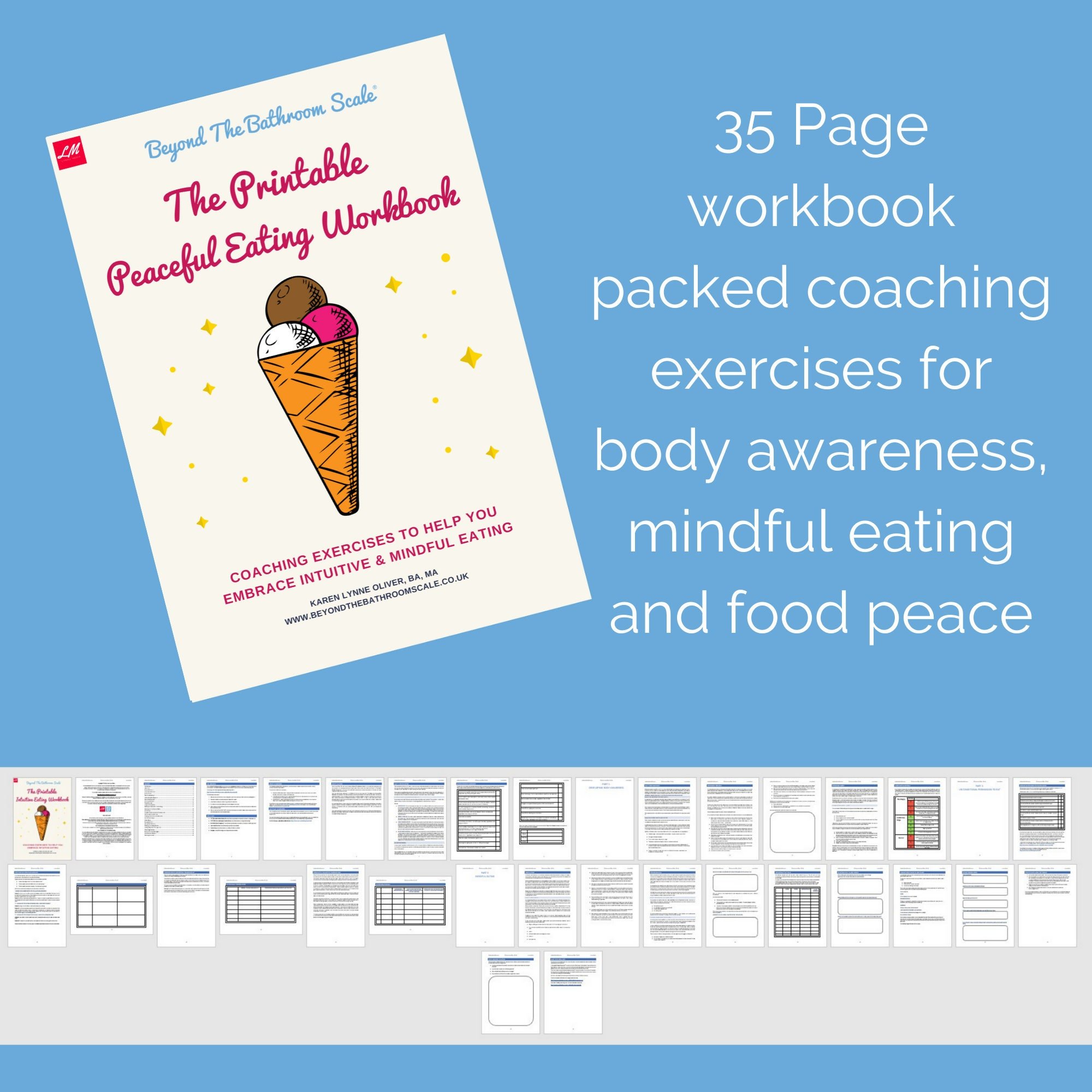
The Printable Peaceful Eating Workbook for people who want to leave diets behind once and for all and embrace Intuitive and Mindful Eating instead.
The workbook is split into three parts:
1. Developing Body Awareness – these exercises are designed to help you check in with your body’s signals, including your hunger and fullness cues.
2. Unconditional Permission to Eat – these exercises will help you understand and ditch the food rules you’ve adopted from past diets and diet culture.
3.Mindful Eating – these final exercises will help you find enjoyment and satisfaction from food and listen out for pesky thoughts of diets creeping back into your mind.
This workbook is packed with useful ‘cheat sheets’ and worksheets for you to print and make copies of.
You could create your own binder of self-help resources for your mental wellbeing and personal development and add to them using additional workbooks available on the Lynne Media Etsy Store.
__________________________________________________________________________________________________
TIPS:
This workbook contains a mix of portrait and landscape pages. Please select 'Auto portrait/landscape'
when printing.
You can also print on both sides to save paper.
**No Printer? No problem!**
Your purchase is a digitally fillable pdf, which you can complete using your computer :)
ABOUT THE CREATOR:
Karen Lynne Oliver, BA, MA, is the Founder of Beyond The Bathroom Scale®, a hub of self-help resources to aid with recovery from disordered eating and body image. Karen is also the Programme Director of The Health Mindset Programme™, a 6-month online self-help programme for anyone who wants to improve their body image and relationship with food.
Karen has had articles published in on HuffPost UK and has been featured in The Metro and Cosmopolitan Magazine. Her award-winning blog and coaching programme is based on the Health at Every Size ® approach to health and draws on the principles of Intuitive Eating, the Body Positivity movement, Motivational Interviewing (MI), Positive Psychology and Dialectical Behaviour Therapy (DBT), in order to help busy women tackle disordered eating, overcome emotional eating and recover from long-term dieting via a holistic, research-led online coaching programme.
A former Social Worker, Karen comes from an academic background of Psychology and Sociology. She holds a bachelor’s degree in Sociology, specialising in health and society and a master’s degree in Social Work. She has trained in Counselling skills and Psychotherapy-based approaches such as CBT, DBT and Motivational Interviewing.
______________________________________________________________________________________________________________________________________________________________________
NOT LICENSED FOR PROFESSIONAL USE
To obtain a professional use license, please purchase the workbooks using this link: https://beyondthebathroomscale.co.uk/therapy-workbooks/p/body-image-disordered-eating-cbt-workbooks-digitally-fillable-and-printable-for-professional-use-health-coach-therapist-pt
© Copyright 2020 Beyond The Bathroom Scale® – All Rights Reserved.
"Beyond The Bathroom Scale" is a Registered UK Trademark and the intellectual property of the website owner, Karen Oliver, trading as Beyond The Bathroom Scale, part of Lynne Media ('our', 'we', 'us').
We take the protection of our intellectual property very seriously. If we discover that you have breached the terms of the license, we may bring legal proceedings against you and seek monetary damages and/or an injunction to stop you using our materials. You could also be ordered to pay our legal costs.
3. Focus on Mindful Eating and Intuition
Mindful eating is a powerful tool for managing food-related anxiety. It involves tuning into your body’s hunger and fullness signals, savouring each bite, and making food choices that honour your physical and emotional needs. By practising mindful eating, you can reduce anxiety and enjoy the food you love without guilt.
Mindful Eating Tips:
Slow Down: Take your time when eating. Chew slowly, savour the flavours, and enjoy the experience of each bite.
Listen to Your Body: Pay attention to your body’s hunger and fullness cues. Eat when you’re hungry, and stop when you’re satisfied rather than when the plate is empty.
Choose Foods That Make You Feel Good: Focus on how different foods make you feel, both physically and emotionally. Choose foods that nourish your body and bring you joy.
4. Reframe Social Pressures Around Food
Social gatherings during the festive period often come with unspoken (or spoken) expectations about food. Whether it’s pressure to try every dish, comments about portion sizes, or unsolicited advice about your eating habits, these situations can be incredibly stressful. Reframing these pressures can help you navigate them with confidence.
Reframing Strategies:
It’s Okay to Say No: Remember that you have the right to say no to food, even if it’s being offered with love. A polite “No, thank you, I’m full” is enough.
Shift the Focus: If conversations about food or weight come up, gently steer the discussion towards other topics that feel more comfortable. “I’d love to hear about your holiday plans” can be a helpful redirection.
Practice Self-Compassion: If you find yourself feeling judged or pressured, remind yourself that you’re doing your best. Be kind to yourself and focus on what makes you feel at ease.
5. Prioritize Connection Over Perfection
The festive period is about more than just food—it’s about connection, joy, and creating memories with the people you care about. When anxiety around food starts to creep in, try to shift your focus towards the bigger picture. It’s the love and laughter shared around the table that truly matters, not the details of what’s on your plate.
How to Prioritize Connection:
Be Present: Focus on the conversations, the laughter, and the shared moments of joy. These are the things that make the festive period special.
Let Go of Perfection: There’s no need for everything to be perfect. Embrace the messiness and imperfection of the season, and allow yourself to enjoy it as it comes.
Practice Gratitude: Take a moment to appreciate the connections you have and the experiences you’re creating. Gratitude can be a powerful antidote to anxiety.
Support for Your Journey
Navigating food-related anxiety during the festive period can be challenging, but with mindfulness, self-compassion, and a focus on connection, you can create a more peaceful and enjoyable experience for yourself. Remember, you don’t have to face this alone.
If you’re looking for more guidance in building a positive relationship with food, my Ultimate Guide to Intuitive Eating Course is here to support you. With video lessons, practical workbooks, and personalized advice, this course is designed to help you overcome food-related anxiety and embrace a healthier, more intuitive approach to eating.

In this course, we'll cover what is meant by Intuitive Eating and how it can help you gain freedom from dieting and improve your relationship with food and your body. We'll cover the main principles of intuitive eating and learn how to avoid turning it into 'just another diet'. We'll look at what the tools of dieting look like, analyse your personal dieting history and examine the dieting mentality and you'll learn to listen to what your body is trying to tell you it needs most.