
Intuitive Eating vs. Dieting: Why Intuitive Eating is Healthier for Long-Term Wellness

In the realm of nourishing our bodies and fostering a positive relationship with food, the debate between intuitive eating and traditional dieting is more crucial than ever. While dieting has long been touted as a solution for weight loss and health improvement, the reality is that it often brings more harm than good. Let’s explore why intuitive eating is a healthier choice and a more sustainable approach aligned with health at every size.
The Pitfalls of Traditional Dieting
Traditional Dieting typically involves strict rules, calorie counting, and the elimination of certain foods. While dieting might promise quick results, the long-term consequences can be pretty detrimental to both physical and mental health. Here’s why:
1. Negative Long-Term Health Effects
Many diets promote severe calorie restriction or the avoidance of entire food groups, which can lead to nutritional deficiencies and metabolic issues over time. Dieting has been linked to a slower metabolism, increased risk of heart disease, and poor bone health. Moreover, the weight loss and gain cycle that often accompanies dieting can further disrupt your body’s natural balance.
Consequences:
Metabolic Disruption: Frequent dieting can slow your metabolism, making it harder to lose weight.
Nutritional Deficiencies: Cutting out food groups may lead to a lack of essential nutrients.
Increased Risk of Chronic Conditions: Long-term dieting can contribute to various health issues, including cardiovascular disease.
2. Deterioration of Your Relationship with Food
Dieting fosters a fraught relationship with food, often leading to feelings of guilt, shame, and an unhealthy preoccupation with eating. This can create a cycle of deprivation and binge eating, which not only affects mental health but also disrupts your natural hunger and fullness cues.
Consequences:
Food Obsession: Dieting can lead to an unhealthy focus on food and body image.
Guilt and Shame: Strict food rules can result in negative emotions when you inevitably deviate from them.
Disrupted Eating Patterns: The cycle of restriction and overeating can harm your ability to listen to your body's natural signals.
“Food is always on my mind. I feel out-of-control around my favourite foods, I always end up binging on them when I finally let myself have them. I worry about calories and macros and track them using an app. I have a long history of dieting which started when I was a teenager. I feel like food probably isn’t this big of a deal for other people, I wish I could relax around it like they seem to.”
Does this sound like you?
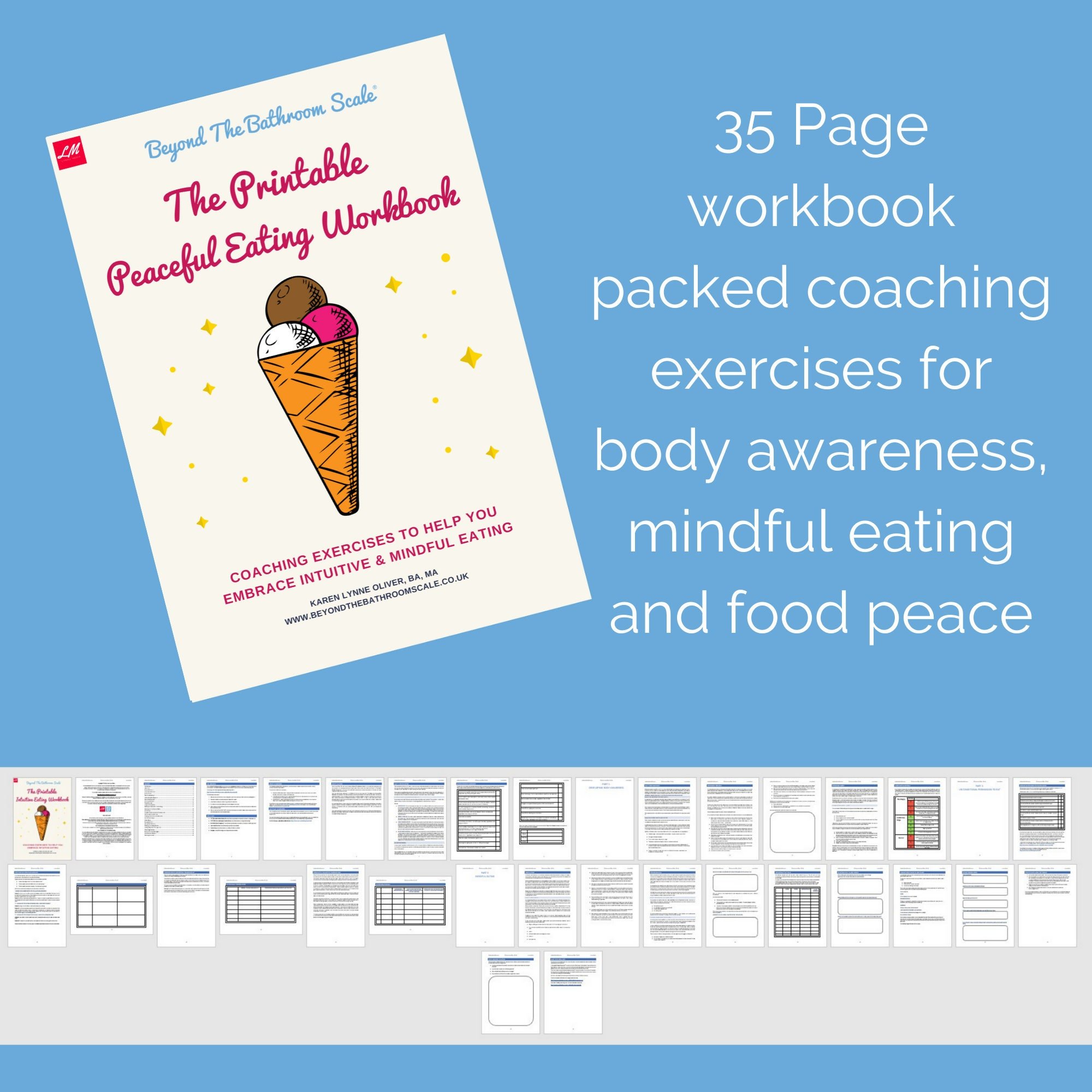
The Printable Peaceful Eating Workbook for people who want to leave diets behind once and for all and embrace Intuitive and Mindful Eating instead.
The workbook is split into three parts:
1. Developing Body Awareness – these exercises are designed to help you check in with your body’s signals, including your hunger and fullness cues.
2. Unconditional Permission to Eat – these exercises will help you understand and ditch the food rules you’ve adopted from past diets and diet culture.
3.Mindful Eating – these final exercises will help you find enjoyment and satisfaction from food and listen out for pesky thoughts of diets creeping back into your mind.
This workbook is packed with useful ‘cheat sheets’ and worksheets for you to print and make copies of.
You could create your own binder of self-help resources for your mental wellbeing and personal development and add to them using additional workbooks available on the Lynne Media Etsy Store.
__________________________________________________________________________________________________
TIPS:
This workbook contains a mix of portrait and landscape pages. Please select 'Auto portrait/landscape'
when printing.
You can also print on both sides to save paper.
**No Printer? No problem!**
Your purchase is a digitally fillable pdf, which you can complete using your computer :)
ABOUT THE CREATOR:
Karen Lynne Oliver, BA, MA, is the Founder of Beyond The Bathroom Scale®, a hub of self-help resources to aid with recovery from disordered eating and body image. Karen is also the Programme Director of The Health Mindset Programme™, a 6-month online self-help programme for anyone who wants to improve their body image and relationship with food.
Karen has had articles published in on HuffPost UK and has been featured in The Metro and Cosmopolitan Magazine. Her award-winning blog and coaching programme is based on the Health at Every Size ® approach to health and draws on the principles of Intuitive Eating, the Body Positivity movement, Motivational Interviewing (MI), Positive Psychology and Dialectical Behaviour Therapy (DBT), in order to help busy women tackle disordered eating, overcome emotional eating and recover from long-term dieting via a holistic, research-led online coaching programme.
A former Social Worker, Karen comes from an academic background of Psychology and Sociology. She holds a bachelor’s degree in Sociology, specialising in health and society and a master’s degree in Social Work. She has trained in Counselling skills and Psychotherapy-based approaches such as CBT, DBT and Motivational Interviewing.
______________________________________________________________________________________________________________________________________________________________________
NOT LICENSED FOR PROFESSIONAL USE
To obtain a professional use license, please purchase the workbooks using this link: https://beyondthebathroomscale.co.uk/therapy-workbooks/p/body-image-disordered-eating-cbt-workbooks-digitally-fillable-and-printable-for-professional-use-health-coach-therapist-pt
© Copyright 2020 Beyond The Bathroom Scale® – All Rights Reserved.
"Beyond The Bathroom Scale" is a Registered UK Trademark and the intellectual property of the website owner, Karen Oliver, trading as Beyond The Bathroom Scale, part of Lynne Media ('our', 'we', 'us').
We take the protection of our intellectual property very seriously. If we discover that you have breached the terms of the license, we may bring legal proceedings against you and seek monetary damages and/or an injunction to stop you using our materials. You could also be ordered to pay our legal costs.
3. Higher Risk of Developing Eating Disorders
Restrictive dieting practices are closely associated with an increased risk of developing eating disorders such as anorexia, bulimia, and binge eating disorder. The pressure to conform to specific body standards can exacerbate these conditions, which have severe implications for both physical and mental health.
Consequences:
Increased Risk: Dieting can be a precursor to more severe eating disorders.
Mental Health Strain: The emotional toll of dieting can contribute to anxiety, depression, and low self-esteem.
Long-Term Impact: Eating disorders have lasting effects on health and well-being.
Why Intuitive Eating is the Healthier Choice
Intuitive Eating offers a refreshing and holistic approach to nourishing your body. Rather than adhering to external rules or aiming for weight loss, intuitive eating focuses on listening to your body’s natural signals and fostering a positive relationship with food. Here’s why this approach stands out:
1. Alignment with Health at Every Size
Intuitive eating embraces the concept of health at every size, recognizing that wellness is not determined solely by weight. It encourages a respectful and compassionate approach to eating that honours your body’s needs without judgment or restriction.
Benefits:
Body Acceptance: Supports a positive body image and self-acceptance.
Balanced Nutrition: Encourages a varied diet that includes all food groups without guilt.
Focus on Well-Being: Prioritizes overall health and happiness rather than a specific weight goal.
2. Restoring a Healthy Relationship with Food
By listening to your body’s hunger and fullness cues, intuitive eating helps you develop a more harmonious and less stressful relationship with food. This approach encourages eating without guilt and enjoying a wide range of foods.
Benefits:
Guilt-Free Eating: Promotes freedom from food-related anxiety and guilt.
Mindful Eating: Encourages you to savour and appreciate your meals.
Natural Regulation: Helps restore your body’s ability to regulate hunger and fullness naturally.
3. Supporting Long-Term Health and Well-Being
Intuitive eating fosters long-term health by focusing on sustainable, health-promoting behaviours rather than short-term fixes. It encourages a balanced eating approach that supports physical and mental well-being.
Benefits:
Sustainable Practices: Offers a lifelong approach to eating that adapts to your body’s needs.
Enhanced Well-Being: Promotes a healthier mindset and reduces the risk of diet-related health issues.
Holistic Focus: Embraces a comprehensive view of health that includes emotional and psychological wellness.
Choosing a Path That Honors Your Health
The choice between intuitive eating and dieting is crucial for your overall well-being. While dieting may offer short-term results, its long-term effects on health and your relationship with food can be harmful. Intuitive eating, on the other hand, supports a positive, respectful approach to nourishment that aligns with health at every size.
If you’re ready to embrace intuitive eating and cultivate a healthier, more fulfilling relationship with food, consider joining our Intuitive Eating Course. With video lessons and practical workbooks, this course provides the tools and support you need to reconnect with your body’s signals and enjoy a balanced, joyful approach to eating. Start your journey toward holistic wellness today and discover how intuitive eating can transform your life.

In this course, we'll cover what is meant by Intuitive Eating and how it can help you gain freedom from dieting and improve your relationship with food and your body. We'll cover the main principles of intuitive eating and learn how to avoid turning it into 'just another diet'. We'll look at what the tools of dieting look like, analyse your personal dieting history and examine the dieting mentality and you'll learn to listen to what your body is trying to tell you it needs most.