
What Does a Healthy Relationship with Food Look Like? - A Guide to Achieving Balance and Peace with Eating

In a world filled with conflicting messages about food, it can be challenging to know what a healthy relationship with food actually looks like. Is it about following the latest diet trends or cutting out entire food groups? Is it about sticking to rigid rules or counting every calorie? The truth is that a healthy relationship with food is much more intuitive, balanced, and compassionate. It’s about nourishing your body, mind, and soul in a way that feels natural and sustainable. Let’s explore what this means and how you can achieve it.
1. Listening to Your Body’s Cues
A healthy relationship with food begins with trust—trusting your body to tell you what it needs. This means tuning in to your hunger and fullness signals and allowing them to guide your eating choices. When you’re hungry, eat. When you’re full, stop. It sounds simple, but in a culture obsessed with dieting, this natural approach can feel revolutionary. By listening to your body, you honour its needs and avoid the pitfalls of overeating or undereating.
2. Embracing All Foods Without Guilt
Food is not just fuel; it’s also pleasure, culture, and connection. A healthy relationship with food means giving yourself permission to enjoy all types of food without guilt or shame. This includes recognizing that there are no “good” or “bad” foods—only foods that nourish you in different ways. Whether it’s a salad or a slice of cake, both have a place in your life. By removing labels and embracing variety, you free yourself from the diet mentality and make room for a more balanced and joyful approach to eating.
3. Eating for Nourishment and Satisfaction
It’s important to find a balance between eating for nourishment and eating for satisfaction. A healthy relationship with food means understanding that both are equally important. Nourishing your body with nutrient-dense foods is essential for physical health while eating foods that bring you joy contributes to emotional well-being. By striking this balance, you support both your body and your mind, creating a holistic approach to wellness.
“Food is always on my mind. I feel out-of-control around my favourite foods, I always end up binging on them when I finally let myself have them. I worry about calories and macros and track them using an app. I have a long history of dieting which started when I was a teenager. I feel like food probably isn’t this big of a deal for other people, I wish I could relax around it like they seem to.”
Does this sound like you?
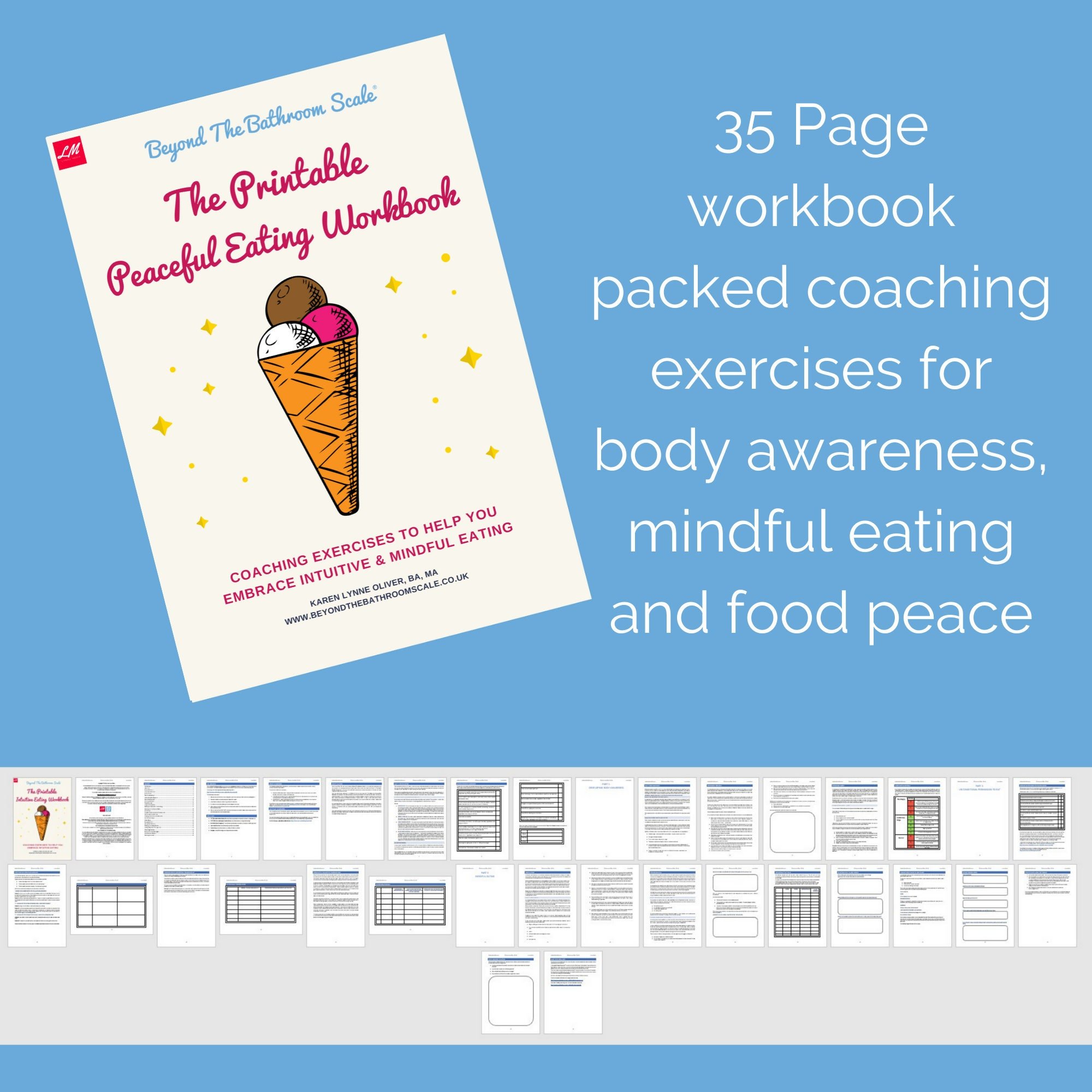
The Printable Peaceful Eating Workbook for people who want to leave diets behind once and for all and embrace Intuitive and Mindful Eating instead.
The workbook is split into three parts:
1. Developing Body Awareness – these exercises are designed to help you check in with your body’s signals, including your hunger and fullness cues.
2. Unconditional Permission to Eat – these exercises will help you understand and ditch the food rules you’ve adopted from past diets and diet culture.
3.Mindful Eating – these final exercises will help you find enjoyment and satisfaction from food and listen out for pesky thoughts of diets creeping back into your mind.
This workbook is packed with useful ‘cheat sheets’ and worksheets for you to print and make copies of.
You could create your own binder of self-help resources for your mental wellbeing and personal development and add to them using additional workbooks available on the Lynne Media Etsy Store.
__________________________________________________________________________________________________
TIPS:
This workbook contains a mix of portrait and landscape pages. Please select 'Auto portrait/landscape'
when printing.
You can also print on both sides to save paper.
**No Printer? No problem!**
Your purchase is a digitally fillable pdf, which you can complete using your computer :)
ABOUT THE CREATOR:
Karen Lynne Oliver, BA, MA, is the Founder of Beyond The Bathroom Scale®, a hub of self-help resources to aid with recovery from disordered eating and body image. Karen is also the Programme Director of The Health Mindset Programme™, a 6-month online self-help programme for anyone who wants to improve their body image and relationship with food.
Karen has had articles published in on HuffPost UK and has been featured in The Metro and Cosmopolitan Magazine. Her award-winning blog and coaching programme is based on the Health at Every Size ® approach to health and draws on the principles of Intuitive Eating, the Body Positivity movement, Motivational Interviewing (MI), Positive Psychology and Dialectical Behaviour Therapy (DBT), in order to help busy women tackle disordered eating, overcome emotional eating and recover from long-term dieting via a holistic, research-led online coaching programme.
A former Social Worker, Karen comes from an academic background of Psychology and Sociology. She holds a bachelor’s degree in Sociology, specialising in health and society and a master’s degree in Social Work. She has trained in Counselling skills and Psychotherapy-based approaches such as CBT, DBT and Motivational Interviewing.
______________________________________________________________________________________________________________________________________________________________________
NOT LICENSED FOR PROFESSIONAL USE
To obtain a professional use license, please purchase the workbooks using this link: https://beyondthebathroomscale.co.uk/therapy-workbooks/p/body-image-disordered-eating-cbt-workbooks-digitally-fillable-and-printable-for-professional-use-health-coach-therapist-pt
© Copyright 2020 Beyond The Bathroom Scale® – All Rights Reserved.
"Beyond The Bathroom Scale" is a Registered UK Trademark and the intellectual property of the website owner, Karen Oliver, trading as Beyond The Bathroom Scale, part of Lynne Media ('our', 'we', 'us').
We take the protection of our intellectual property very seriously. If we discover that you have breached the terms of the license, we may bring legal proceedings against you and seek monetary damages and/or an injunction to stop you using our materials. You could also be ordered to pay our legal costs.
4. Being Mindful and Present During Meals
Mindful eating is a cornerstone of a healthy relationship with food. It involves being fully present during meals, savouring each bite, and appreciating the flavours, textures, and aromas of your food. This practice not only enhances your enjoyment of food but also helps you tune in to your body’s signals of hunger and fullness. By eating mindfully, you’re more likely to eat in a way that honours your body’s needs and supports your overall well-being.
5. Letting Go of Food Rules and Restrictions
Diet culture often imposes rigid rules and restrictions around food, which can lead to feelings of deprivation and loss of control. A healthy relationship with food involves letting go of these external rules and reconnecting with your body’s internal wisdom. Instead of following a set of guidelines, allow your body to guide your eating choices. This shift from external control to internal trust fosters a more peaceful and intuitive relationship with food.
6. Practicing Self-Compassion
Self-compassion is key to a healthy relationship with food. It’s about being kind to yourself, especially during moments of struggle. Instead of criticizing yourself for eating a certain way, approach your eating habits with curiosity and kindness. Remember, it’s okay to have days when your eating isn’t perfect. What matters is how you respond—with understanding, forgiveness, and a commitment to learning from the experience.
7. Understanding the Role of Emotions
Our relationship with food is deeply connected to our emotions. A healthy relationship with food means recognizing when you’re using food to cope with emotions and finding alternative ways to address those feelings. Whether it’s stress, boredom, or sadness, it’s important to explore other forms of self-care and emotional expression that don’t involve food. This doesn’t mean you can’t enjoy comfort foods, but it does mean being mindful of when and why you’re turning to food for comfort.
8. Focusing on Long-Term Well-Being, Not Short-Term Fixes
A healthy relationship with food is focused on long-term well-being rather than short-term fixes. It’s not about quick results or drastic changes; it’s about building sustainable habits that support your health over time. This means prioritizing your overall well-being rather than striving for perfection. It’s about making choices that feel good and nourish your body, mind, and spirit for the long haul.
Building Your Healthy Relationship with Food
Achieving a healthy relationship with food is a journey, not a destination. It requires patience, practice, and a willingness to unlearn harmful beliefs and behaviours. But with each step, you move closer to a place of balance, peace, and freedom around food.
If you're ready to deepen your journey, our comprehensive Course Library is here to support you. With courses on body image, intuitive eating, emotional eating, managing stress, eating disorder awareness, and joyful movement, you'll find the tools and guidance to cultivate a healthier relationship with food and your body. Each course is designed to empower you with practical strategies and compassionate insights, helping you embrace a more holistic approach to well-being.
Explore our Course Library today and take the next step towards a more nourishing and joyful relationship with food.

In this course, we'll cover what is meant by Intuitive Eating and how it can help you gain freedom from dieting and improve your relationship with food and your body. We'll cover the main principles of intuitive eating and learn how to avoid turning it into 'just another diet'. We'll look at what the tools of dieting look like, analyse your personal dieting history and examine the dieting mentality and you'll learn to listen to what your body is trying to tell you it needs most.